
If you’ve been dealing with standing water in your yard, you’ve probably come across French drains as the go-to fix.
And yeah, they work, but they’re not always the easiest or cheapest option. Digging trenches, laying pipe, hauling gravel… It’s a whole project.
The good news is you’ve got other ways to handle drainage that can be just as effective, and in some cases, way more attractive. Some of these options blend right into your landscaping, so you’re fixing the problem without making your yard look like a construction zone.
In this post, we’ll go over eight great french drain alternatives.
#1. Swales
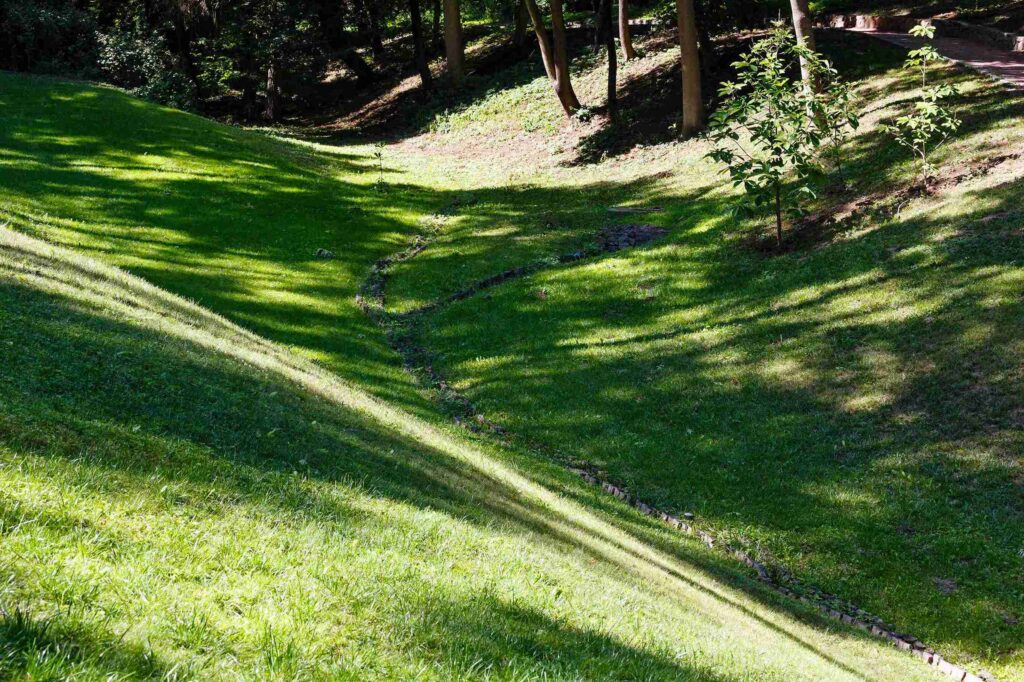
A swale is basically a shallow, gently sloped ditch that guides water away from where you don’t want it.
That’s it. Nothing fancy, but surprisingly effective.
Instead of water pooling up in one spot, a swale nudges it along to a better location – like the edge of your yard or a drainage area.
The nice part is that it doesn’t look like a ditch once it’s finished.
You can cover it with grass or even plant it, and it just blends in.
Swales work best in yards that already have a slight slope. If your yard is completely flat, you might need to do a bit of shaping to make it effective. Still, it’s one of the simplest fixes out there and doesn’t require a bunch of materials.
Also Read: How To Unclog A French Drain
#2. Dry Creek Beds
If you want something functional that also looks really good, this is where dry creek beds shine.
Picture a shallow trench filled with rocks and gravel, designed to look like a natural stream.
When it rains, water flows through it instead of spreading across your lawn. When it’s dry, it just looks like part of your landscaping.
This french drain alternative is great for redirecting runoff, especially if water tends to move in a certain direction already. You’re basically giving it a defined path and making it look intentional.
One thing to keep in mind: it’s not built for heavy drainage right next to your foundation. It’s more about guiding surface water than handling serious saturation.
#3. Rain Gardens
Rain gardens are french drain substitutes that feel almost too nice to be practical, but they actually do a great job.
You create a slightly lower area in your yard and fill it with plants that thrive in wet conditions.
When it rains, water collects there and slowly soaks into the ground instead of sitting on the surface or running toward your house.
Here’s what makes them appealing:
- They look like a garden, not a drainage fix
- They help filter runoff naturally
- They support pollinators and local plants
Rain gardens are best for moderate drainage issues. If you’ve got serious flooding, you’ll probably want to combine this with something else.
But for everyday runoff and soggy spots, they’re a really nice option.
#4. Dry Wells
A dry well is a bit more hidden, but it’s one of the closest alternatives to a French drain in terms of function.
It’s an underground structure that collects water and then slowly releases it into the surrounding soil. You can connect it to downspouts or place it in areas where water tends to gather.
Also Read: Dry Well Alternatives
From the surface, you wouldn’t even know it’s there. Everything happens below ground, which makes it great if you don’t want to change the look of your yard.
Dry wells are especially useful when you’re dealing with concentrated water, like runoff from your roof. Instead of letting that water spill out and cause problems, you’re giving it a place to go.
#5. Yard Grading (Re-Sloping The Land)
Sometimes the issue isn’t that your yard can’t drain, it’s just draining in the wrong direction.
If water is flowing toward your house, that’s a grading problem. Fixing the slope so water moves away from your foundation can solve the issue at its source, instead of trying to manage it after the fact.
This can be as simple as adding soil to create a gentle slope, or as involved as reworking a larger section of your yard. It depends on how bad things are.
It’s not the quickest fix, but it’s one of the most effective long-term solutions.
Once the slope is right, a lot of drainage problems just… stop happening.
#6. Terracing (For Sloped Yards)
For those of us living on a hill, water can become a destructive force that washes away mulch and carves deep ruts in the dirt.
Terracing is the art of turning a steep slope into a series of flat steps.
You can use wooden timbers, stone blocks, or even poured concrete to build low retaining walls.
These “steps” break the fall of the water, slowing it down so it doesn’t gain the speed and power to cause erosion.
Also Read: Geotextile Fabric For French Drain
By slowing the water down, you give it more time to soak into the soil at each level. Plus, those flat sections are perfect for planting vegetables or flowers.
It’s a bit of an investment in materials, but it’s one of the most permanent and effective ways to manage water on a grade.
#7. Permeable Surfaces
A lot of drainage problems come from surfaces that don’t let water pass through – like concrete or asphalt. Water hits those areas and has nowhere to go, so it runs off and collects somewhere else.
Permeable surfaces fix that by letting water soak through instead of sitting on top.
Options include gravel, permeable pavers, and special grid systems that support weight while allowing drainage.
These are great for driveways, patios, and walkways.
Instead of fighting the water, you’re working with it. It goes straight into the ground, which reduces runoff and helps prevent puddles from forming in the first place.
#8. Water-Loving Plants Or Trees
If your yard is just a little bit damp, you might be able to solve it with a trip to the nursery.
Some trees are absolute “thirsty” machines. A single mature Willow tree or a Red Maple can drink hundreds of gallons of water in a single day.
Planting these in the wet spots of your yard can act like a natural pump, pulling moisture out of the ground and releasing it into the air through their leaves.
It’s the most hands-off approach there is.
You dig one hole, plant a tree, and let nature take care of the rest. Shrubs like Dogwood or Hydrangeas also love “wet feet” and can help stabilize the soil while drinking up the excess.
It’s the ultimate win-win because you get a more beautiful yard and less mud to deal with.
Just be smart about placement. Some trees have aggressive roots, so you don’t want them too close to your home or underground utilities.
Bottom Line
French drains get a lot of attention, but they’re not your only option – and honestly, they’re not always the best fit for every yard.
If you’re dealing with minor pooling, something simple like a swale or rain garden might be all you need. If the issue is more serious, a dry well or proper grading can be a good alternative to French drains.
And if you care about how your yard looks, options like dry creek beds and permeable surfaces let you fix drainage without sacrificing style.


