
If you’ve been dealing with puddles in your yard or water dumping out of your gutters and going nowhere fast, you’ve probably come across the idea of a dry well.
Then you start looking into it and suddenly everything involves plastic tanks, barrels, or expensive kits.
So naturally, the question comes up: can you skip all that and just keep things simple?
Short answer: yes, you can. And in a lot of cases, it works just fine. But like most DIY drainage fixes, the details matter more than people expect.
In this post, we’ll explain if you can build a dry well without a container.
Can You Build A Dry Well Without A Container?
Yes, you can build a dry well without using any kind of container. The container setups you see online are really just a more structured way to do that. They’re not required.
A container-free version is basically a hole in the ground filled with gravel or crushed stone. That’s it. Water flows in, spreads through the gaps in the stone, and gradually drains into the surrounding soil.
It’s a simpler approach, cheaper, and honestly a lot easier to build if you’re doing it yourself over a weekend.
Also Read: Great Dry Well Alternatives

How A Container-Free Dry Well Works
Think of this like creating an underground sponge made out of rock.
When water comes in (usually from a gutter downspout or a low spot in your yard) it enters the pit you’ve dug. Instead of sitting there and turning into a muddy mess, it filters through layers of gravel.
Those little air pockets between the stones give the water space to spread out.
From there, gravity does the rest. The water slowly seeps into the surrounding soil over time.
If you line the hole with landscape fabric before adding gravel, it helps keep dirt from washing in and clogging everything up.
That one step makes a big difference in how long your dry well actually lasts.
It’s simple, but it’s effective when the conditions are right.
When A Dry Well Without Container Makes Sense
This kind of setup shines in pretty specific situations, and when you hit those conditions, it’s hard to beat for the price.
It works best when you’re dealing with smaller drainage problems.
Think gutter runoff from a typical house, or that annoying soggy patch in the yard that shows up after every decent rain. If the volume of water isn’t overwhelming, a gravel dry well can handle it.
If your yard drains reasonably well (something like sandy or loamy soil) you’re in good shape too.
Water will soak in at a steady pace, and the system won’t get overwhelmed.
It’s also a great option if you just want a straightforward DIY project without buying specialty parts. No complicated installs, no fitting pieces together. Just digging, lining, and filling.
Also Read: Sump Pump Discharge Ideas
When It Might Not Work Well
Now for the flip side, because this isn’t a magic fix for every situation.
If your soil is heavy clay, you’re going to run into problems.
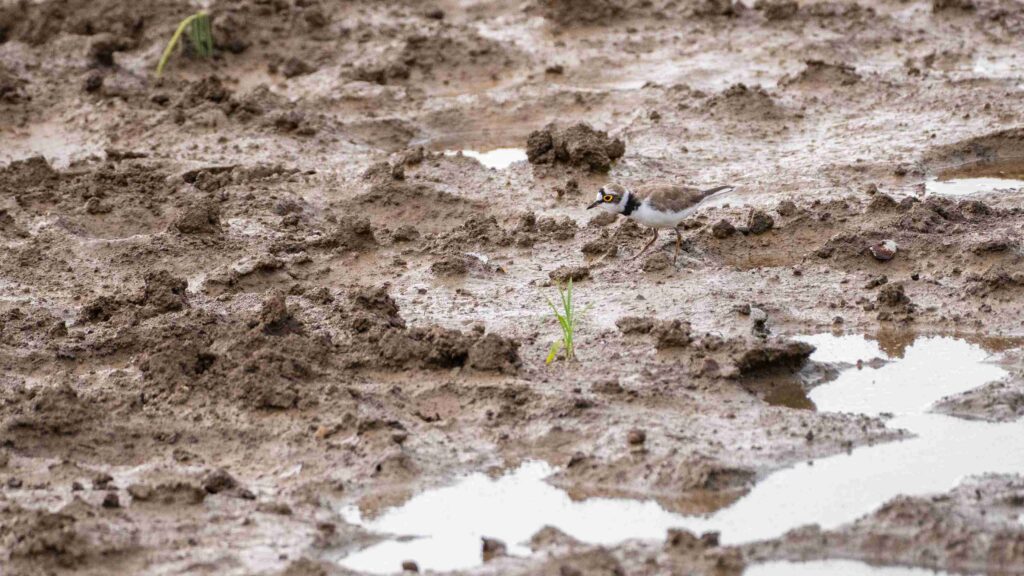
Clay doesn’t absorb water very well, so instead of draining, water just sits there. In that case, your dry well turns into more of a holding tank than a drainage solution, and eventually it backs up.
Another issue is volume. If you’ve got a large roof pushing out a ton of water during storms, or your yard tends to flood regularly, a simple gravel pit might not keep up.
It doesn’t have the storage capacity of a structured system.
Over time, there’s also the risk of clogging.
Dirt, debris, and sediment can slowly work their way into the gravel and reduce how well it drains. That doesn’t happen overnight, but it’s something to keep in mind.
Pros And Cons Of A Dry Well Without Container
Here’s a look at the pros and cons of building a dry well without a container:
| Pros | Cons |
| Low cost and budget-friendly | Can clog over time |
| Easy DIY installation | Holds less water than container systems |
| No need for special materials | Not ideal for clay soil |
| Flexible size and shape | May require occasional maintenance |
Also Read: Can You Do A French Drain Without Pipe?
Tips to Make It Last Longer
If you’re going to build one of these, here a few small decisions can make a big difference in how well it holds up over time:
- Use clean, washed gravel instead of dirt-covered stone. That alone helps prevent early clogging
- Always line the hole with landscape fabric to keep soil from mixing in
- Try to keep leaves and debris out of the system, especially if it’s connected to a downspout
Beyond that, placement matters more than people think. Keep the dry well a good distance from your home’s foundation so water isn’t draining right back toward it.
And if possible, put it in a naturally lower area of your yard where water already wants to go.
A little planning upfront saves a lot of headaches later.
Alternative Options To Consider
Sometimes a gravel dry well just isn’t enough, and that’s fine. There are a few other routes you can take depending on what you’re dealing with:
Plastic Dry Well Kits
These are the more “official” version of a dry well.
They use plastic chambers or barrels that hold water and release it slowly into the ground.
They handle larger volumes better and tend to last longer with less maintenance, but they do cost more and take a bit more effort to install.
Also Read: Geotextile Fabric For French Drain
French Drains
A French drain is more about moving water than storing it. It uses a perforated pipe buried in gravel to redirect water away from problem areas.
If your main issue is water collecting in one spot, this can be a really effective solution.
Rain Barrels
If you like the idea of putting that water to use instead of just sending it into the ground, rain barrels are worth a look. They collect runoff from your gutters so you can reuse it for watering plants, lawns, or even cleaning outdoor areas.
Bottom Line
You don’t need a container to build a working dry well. A simple gravel-filled pit can handle small to moderate drainage problems and is one of the easiest DIY fixes out there.
That said, it’s not the right solution for every yard. Soil type, water volume, and placement all play a role in how well it performs.
Get those lined up, and it can work surprisingly well. Ignore them, and you’ll be back to dealing with puddles again.
If your situation is on the lighter side, this is a solid, no-frills option that gets the job done without overcomplicating things.


