
If you’ve been dealing with standing water around your home, there’s a good chance you’ve come across both channel drains and French drains.
At first, they can sound pretty similar.
Both move water away from your property, both help prevent flooding, and both can save you from expensive water damage down the road.
Still, they work in completely different ways.
Picking the wrong one can leave you with the exact same drainage problem a few months later, except now you’ve spent money on a system that doesn’t really fix anything.
In this post, we’ll compare channel drains vs French drains to help you decide what to get.
#1 Purpose
The main purpose of a channel drain is to collect and move surface water fast.
Think about water rushing down a driveway during a storm or puddles forming across a patio. A channel drain grabs that water before it has a chance to spread everywhere.
A French drain has a completely different job.
It handles water trapped in the soil. Instead of catching water on top of the ground, it redirects underground moisture away from problem areas like foundations, basements, retaining walls, and soggy yards.
So right away, the biggest difference comes down to where the water problem starts.
If the issue happens on the surface, a channel drain usually makes more sense.
If the ground stays soaked for days after rain, a French drain is often the better fit.
Also Read: French Drain Alternatives
#2 Installation Location
Channel drains are installed directly into hard surfaces. You’ll commonly see them in:
- Driveways
- Pool decks
- Garage entrances
- Patios
- Walkways
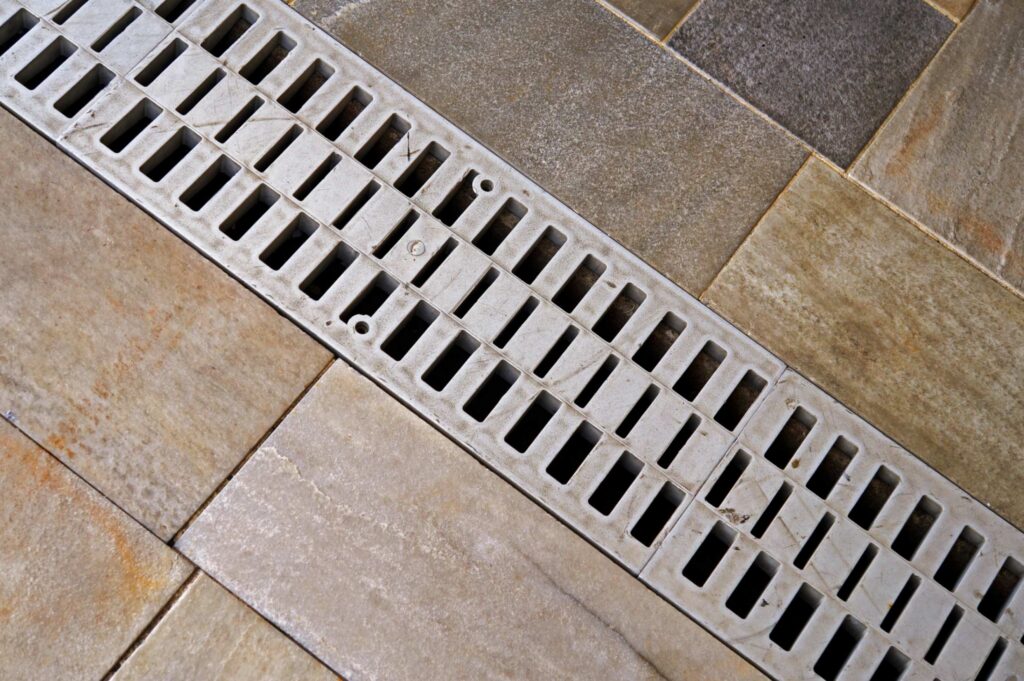
They sit flush with the surface and usually have a visible grate running across the drain.
French drains are buried underground.
Contractors dig a trench, add gravel, install a perforated pipe, then cover everything back up. Once completed, you may barely notice it’s there.
French drains often go around foundations, across wet parts of a yard, near retaining walls, or along slopes where water naturally collects.
#3 Drain Design
The designs are pretty different once you look at how each system works.
A channel drain is basically an open trench with a grate on top. Water flows into the trench and moves through pipes toward a drainage outlet.
A French drain is more like an underground filter system.
Water seeps through gravel into a perforated pipe buried below the surface. The pipe then carries the water away from the area.
One system catches water directly. The other slowly collects moisture from the surrounding soil.
That’s why channel drains react quickly during heavy rain, while French drains work more gradually over time.
Also Read: Geotextile Fabric For French Drain
#4 Best Applications
Channel drains work best in places where water moves across hard surfaces quickly. They’re especially useful in areas where standing water creates slipping hazards or starts pooling near buildings.
French drains shine in areas with poor soil drainage or chronic moisture issues like wet lawns, basement protection, foundation drainage, retaining walls, hillside drainage
In some cases, homeowners actually use both systems together.
A driveway may use a channel drain while the backyard relies on a French drain to handle underground moisture.
#5 Appearance
Appearance may not seem like a huge deal at first, but it matters once the installation is done and you’re staring at it every day.
Channel drains stay visible.
The grate remains exposed because that’s how water enters the system. Some modern grates look sleek and blend nicely into concrete or pavers, though you’ll still notice them.
French drains are mostly hidden underground.
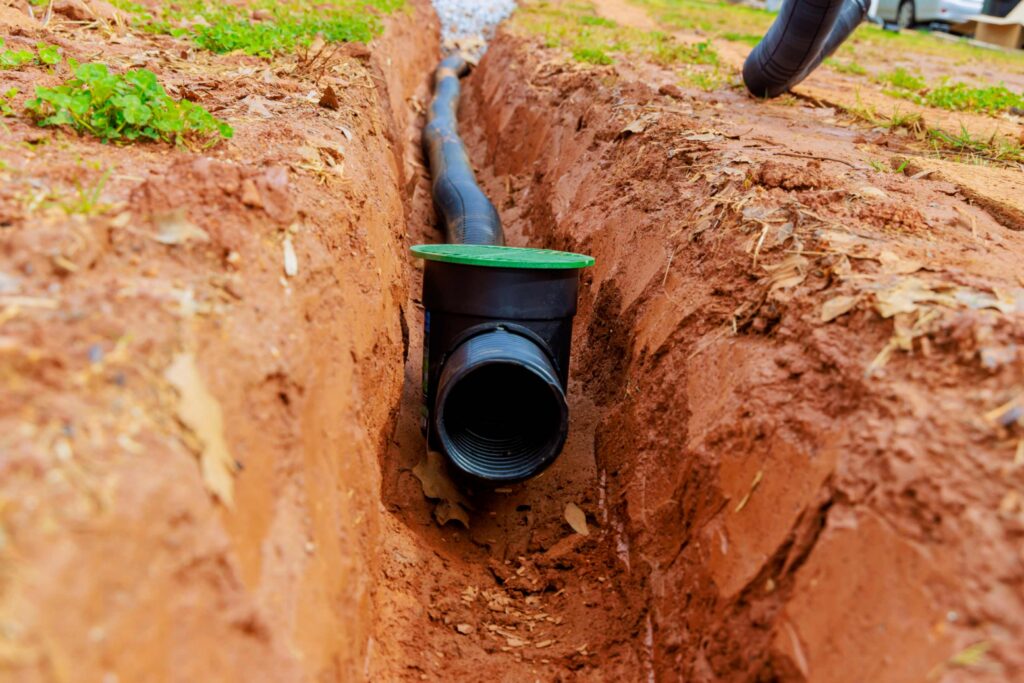
After installation, the area may look almost completely normal again, especially after grass grows back over the trench.
If you want the drainage system to stay mostly out of sight, French drains usually win in this category.
#6 Maintenance Requirements
Every drainage system needs some level of maintenance.
Ignore them long enough and eventually problems show up.
Channel drains need regular cleaning because leaves, dirt, mulch, and debris can collect inside the grate.
Thankfully, cleaning them is usually pretty simple. You remove the grate, clear out the blockage, and flush the drain if needed.
French drains are lower maintenance day to day, but repairs can become more difficult if something goes wrong underground. Roots, sediment buildup, or crushed pipe sections can create drainage issues over time.
The good part is that a properly installed French drain can go years without major attention.
#7 Installation Cost
Channel drains are often cheaper for smaller projects, especially during new construction or patio installation. Since the drain installs directly into concrete or pavers, labor tends to stay more manageable in straightforward setups.
French drains can get expensive pretty quickly because they involve excavation, gravel, piping, trenching, and landscaping repairs afterward.
The deeper the trench and the larger the drainage area, the higher the cost climbs.
In general, French drains usually cost more for large residential drainage projects.
#8 Lifespan
French drains typically last longer than channel drains.
Channel drains made from quality materials can easily last decades, especially if the grates stay clean and water flows freely.
French drains can last for about 30 – 40 years, though it depends on the quality of installation. Good filter fabric, proper gravel placement, and solid pipe installation help prevent clogs and premature failure.
Cheap installations tend to fail much sooner because soil and debris slowly work their way into the pipe system.
Also Read: How To Unclog A French Drain
Should I Get A French Drain Or Channel Drain?
This really comes down to the kind of water problem you’re dealing with.
If water rushes across a hard surface and creates puddles around concrete areas, a channel drain is probably the better choice. It’s built specifically for fast surface runoff.
If your lawn stays muddy, your basement feels damp, or water builds up around the foundation after rain, a French drain usually makes more sense because it handles underground moisture.
Some properties benefit from using both systems together since surface water and groundwater problems can happen at the same time.
The biggest mistake people make is choosing a drain based on price alone instead of identifying where the water is actually coming from.
Bottom Line
The main difference between a channel drain and a French drain is that a channel drain is better for collecting fast-moving surface water. Plus it’s usually easier to clean and often cheaper for smaller projects.
A French drain, on the other hand, is better at handling underground water, staying hidden from view, and solving long-term soil drainage problems. Plus, they last longer.


