
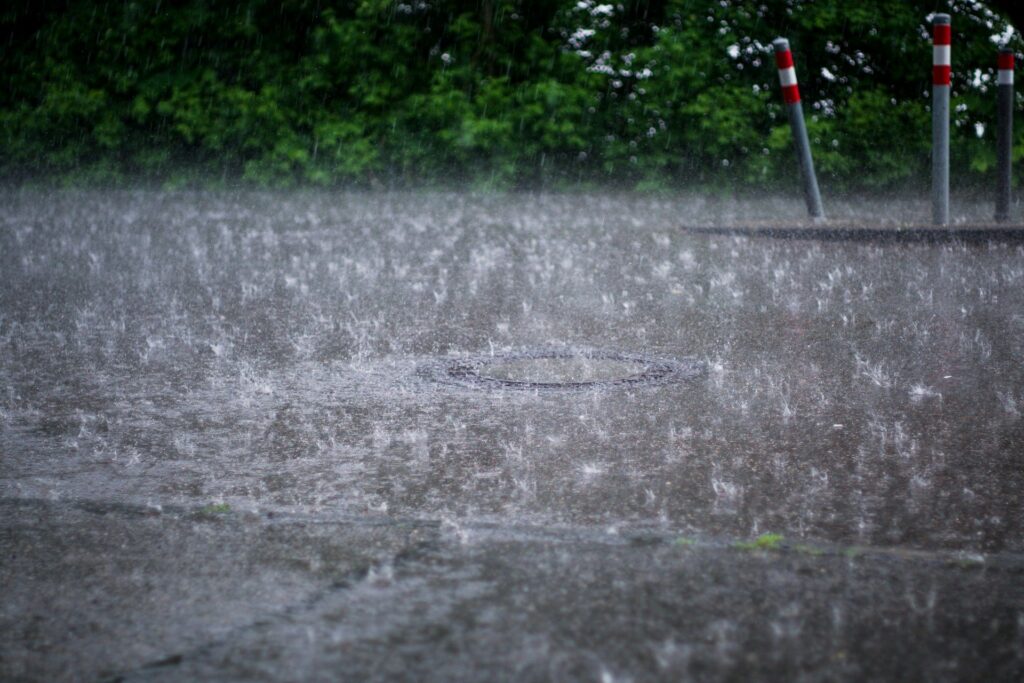
Water pooling next to your driveway might not seem like a big deal at first, but it can lead to bigger problems over time.
You might notice things like muddy patches along the edges, soil washing away after heavy rain, or water collecting near your garage.
If these issues keep coming back, a French drain could be a practical solution.
In this post, we’ll explain how a french drain next to a driveway works, where to install it, and what you should know before getting started.
Can You Install A French Drain Next To A Driveway?
Yes, you can install a French drain next to a concrete, asphalt, or gravel driveway. In fact, this can be a useful way to manage water that collects along the pavement or leaves the surrounding ground constantly wet.
A French drain typically consists of a perforated pipe surrounded by drainage gravel inside a trench. Water enters the gravel and pipe, then flows toward a suitable outlet.
This helps relieve excess water in the soil instead of allowing it to sit along the driveway’s edge.
The main thing is to install the drain carefully.
Digging too close to the driveway without considering its base can loosen the supporting soil and contribute to cracking or settling.
You also need somewhere safe for the collected water to go.
Also Read: Can You Install French Drain Next To Foundation?
Signs You Need A French Drain
Not every puddle calls for a French drain, but some drainage problems are worth paying attention to. Here are a few common signs to look for:
- Water pools along the driveway after heavy rain and takes a long time to disappear.
- The soil beside the pavement stays muddy or soggy for days.
- Rainwater washes away gravel, mulch, or soil near the driveway’s edge.
- Water flows toward your garage, home, or another area where it shouldn’t collect.
You might also notice sections of the driveway beginning to settle or develop cracks.
These problems can have several causes, so a French drain isn’t always the answer. However, if poor drainage contributes to the issue, managing the water may help prevent further damage.
How To Install A French Drain Next To Driveway
Installing a French drain next to your driveway is not easy but with a sturdy shovel, a weekend of free time, and some elbow grease, you can knock this project out on your own.
Here’s what you need to do:
#1 Identify The Source Of The Water
Put on your rain boots during the next heavy downpour and watch where the water actually flows.
Check if the torrent comes from a sloping yard above your driveway, a misdirected roof downspout, or low spots in the driveway grade itself.
Knowing the exact path of the runoff tells you where the drain must begin and how far it needs to stretch to catch everything.
Also Read: Channel Drains Vs French Drains
#2 Choose The Right Location
Plan your trench line along the edge where the yard naturally slopes toward the pavement.
You want the ditch running alongside the driveway so it creates a continuous interceptor barrier between the lawn and the pavement.
Make sure your planned route has an unobstructed path to a practical exit point, like a dry well, pop-up emitter, or a roadside drainage swale.
#3 Dig The Trench
Start digging your trench roughly twelve to eighteen inches deep and ten to twelve inches wide.
Most importantly, your trench must slope downhill at a minimum gradient of one inch for every ten feet of run so water moves naturally by gravity.
Use a line level or pour a bucket of water down the bare dirt trench to confirm it flows toward your discharge point rather than sitting completely flat.
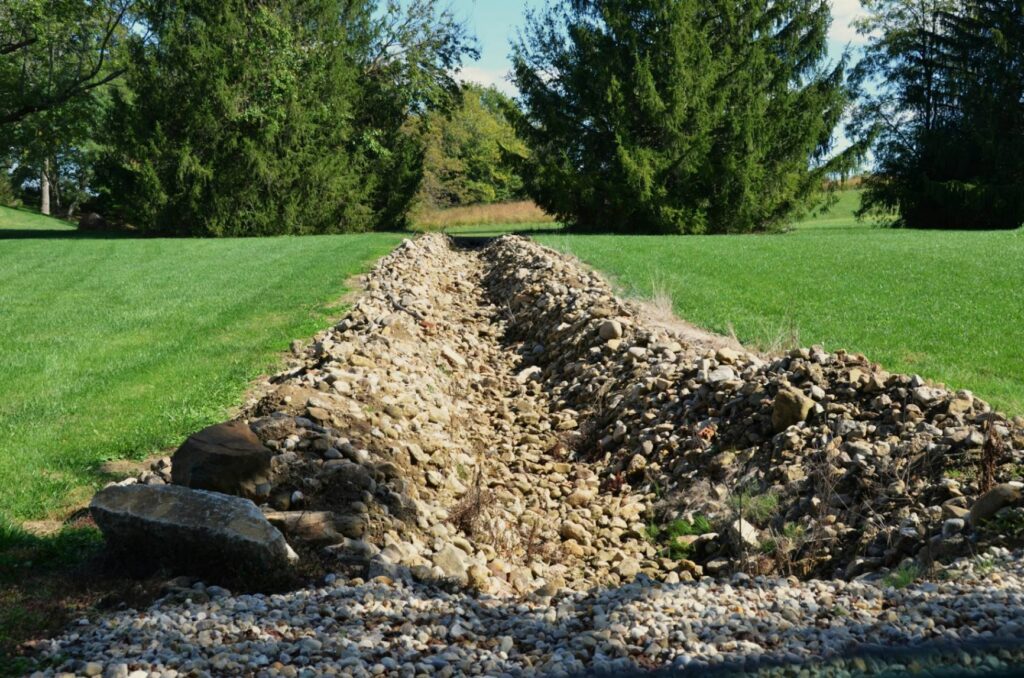
#4 Add Landscape Fabric And Gravel
Line the entire length of your excavated trench with non-woven geotextile filter fabric, leaving plenty of excess material draping over the sides.
This fabric acts like a barrier that keeps fine dirt particles and plant roots out while letting clean water pass right through.
Also Read: What Size Rock For A French Drain?
Once the cloth is in place, pour a two-inch bed of washed crushed stone or river rock along the bottom to support the pipe.
#5 Install The Perforated Drain Pipe
Lay your four-inch perforated drainage pipe directly on top of the gravel bed with the drain holes pointing downward.
Pointing the holes toward the bottom might sound counterintuitive, but it allows groundwater to seep in from underneath as the trench fills and flow away instantly without backing up into your lawn.
Snap your pipe sections together firmly and check your downstream angle one more time.
#6 Cover The Drain And Direct Water Away
Pour more crushed gravel over the pipe until it is covered by several inches of stone, then fold the fabric flaps over the top like a wrapped burrito.
You can top the trench with decorative river gravel for an exposed French drain look that catches surface sheets instantly, or cap it with coarse sand, topsoil, and sod to hide it completely.
This should give you some decorative ideas.
Run the exit end of the pipe out to a pop-up emitter in the lower yard, a rain garden, or the street ditch.
How Far Should A French Drain Be From A Driveway?
A French drain should ideally sit two to three feet away from the edge of the driveway, though it can go as close as twelve to eighteen inches if your property space is tight.
Keeping a small cushion of undisturbed soil between the trench and the pavement prevents the gravel excavation from undermining the driveway base.
If you must dig directly against the concrete or asphalt edge, you should backfill the entire trench with angular crushed stone all the way to the surface to maintain structural support under turning car tires.
When Should You Hire A Professional?
You should hire a drainage professional like The French Drain Guys if:
- Your yard is completely flat
- Your run hits heavy bedrock or massive tree roots
- You lack an easy gravity outlet.
Creating an artificial slope across flat acreage often requires specialized trenching machinery and laser-guided grading tools that go beyond basic weekend DIY gear.
If your trench path crosses underground utility lines like gas, water, or electric feeds, bringing in an insured excavation contractor keeps your property safe from accidental line breaks.
Bottom Line
Yes, you can install a French drain next to a driveway, but you must maintain a safe distance of at least 12 inches (300 mm) from the edge of the pavement.
Excavating too close can destabilize the driveway’s sub-base and cause the concrete or asphalt to crack and collapse.
While a French drain is highly effective for managing subsurface groundwater beneath the lawn, a surface channel drain is usually better for capturing heavy rainwater runoff directly off the driveway surface.


